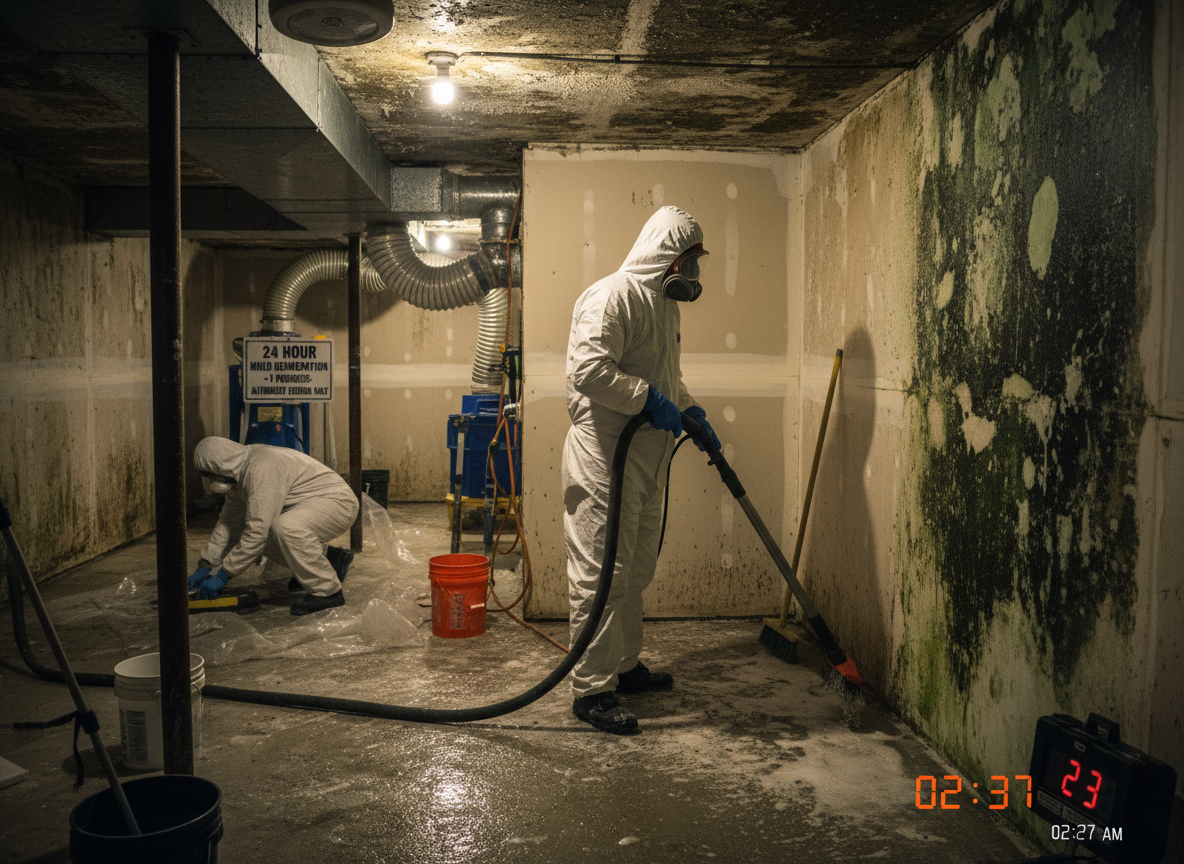
Older Burton homes often feature crawl spaces with dirt floors and minimal ventilation that hold water from roof leaks or plumbing failures. When moisture sits against joists and subflooring, black mold colonies form within 48 hours. A 24 hour response starts with moisture meters and borescopes to map the full extent before any demolition begins, preventing unnecessary wall removal.
Containment uses 6-mil poly sheeting sealed to the ceiling and floor with negative air machines exhausting outside. This keeps spores from migrating into living areas during removal. Affected drywall, insulation, and baseboards are cut out at least 18 inches beyond visible growth. All debris is double-bagged and removed the same day to limit airborne particles.
After physical removal, non-porous surfaces receive an antimicrobial treatment followed by HEPA vacuuming. Technicians then run commercial dehumidifiers until wood moisture content drops below 12 percent. Final clearance includes air sampling and a written report that homeowners can share with insurers or future buyers.
Vashon Island terrain and narrow roads can slow equipment delivery, so the crew keeps a stocked truck at the 23807 97th Ave SW shop for immediate dispatch. Access through tight crawl-space hatches or steep lots often requires extra time and smaller equipment than mainland jobs.
Technician insight
In Burton, the thing that catches most people out with 24 hour mold removal is the way cedar siding on pre-1980 homes lets wind-driven rain sit against sheathing for weeks before anyone notices; once it reaches the paper-faced drywall inside, the colony is already behind the cabinets.
Crawl-space leak under 1950s Burton cottage
A kitchen sink drain leaked for several weeks into the dirt crawl space. We found black mold on joists and subfloor extending six feet past the visible stain. After full containment we removed the affected wood, treated the remaining structure, and dried the space to 11 percent moisture content before reinstalling insulation.
How it works
- 1
Emergency Assessment
Technician arrives within hours, measures moisture levels, and identifies all affected materials using infrared and borescope tools.
- 2
Containment Setup
Plastic barriers and negative air machines isolate the work zone so spores do not spread to clean areas of the home.
- 3
Removal and Disposal
Contaminated drywall, insulation, and wood are cut out, double-bagged, and hauled away the same day.
- 4
Drying and Treatment
Dehumidifiers and air movers run until moisture readings are safe; remaining surfaces receive antimicrobial application.
- 5
Clearance Testing
Independent air samples confirm spore counts are back to normal before barriers come down.
Pricing
Cost depends on square footage affected, depth of hidden growth, and access difficulty in crawl spaces or tight lots.