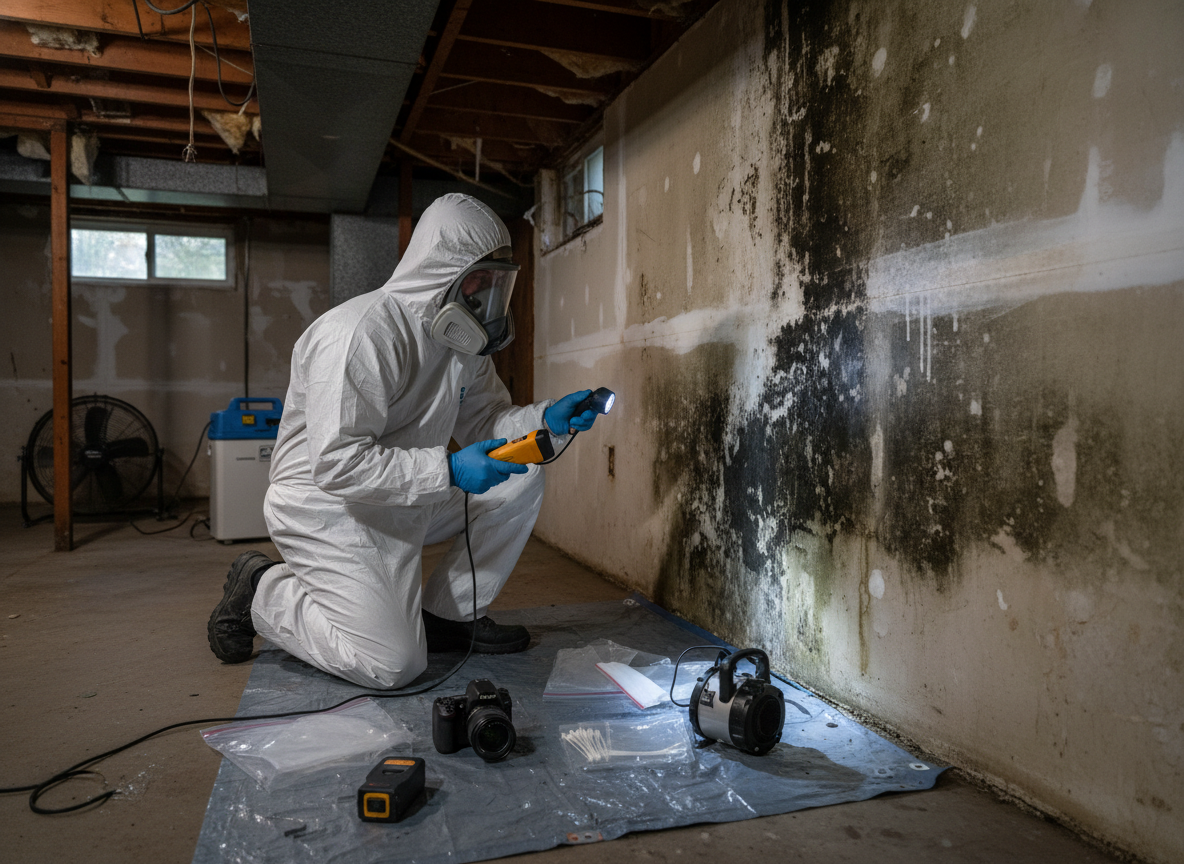
Black mold inspection in Burton starts with mapping moisture sources common to Vashon Island properties where heavy Pacific Northwest rainfall and poor drainage around crawl spaces allow hidden colonies to form behind baseboards and in attic insulation. Technicians use moisture meters and borescopes to check wall cavities in homes built before the 1980s that often lack modern vapor barriers, focusing on areas near plumbing stacks and roof valleys that trap water after winter storms.
Edge cases include mold growth inside HVAC ducts that circulate spores throughout single-story ranch houses typical of Burton neighborhoods, or behind exterior siding where wind-driven rain from the Sound penetrates older cedar shakes. Inspectors note that King County building codes require ventilation upgrades during any remediation, so reports always flag missing soffit vents or blocked crawl-space openings that homeowners overlook until odors appear.
Warnings center on disturbing visible patches without containment, which can aerosolize spores into living areas; inspectors always test air quality in adjacent rooms before any surface work. Concrete slab homes near Burton's low-lying roads also face rising damp from saturated soil, requiring thermal imaging to locate temperature differentials that signal active colonies under flooring.
Final reports detail exact locations, species samples sent for lab confirmation, and recommended containment steps that align with local humidity levels staying above 60 percent for much of the year.
Technician insight
In Burton the thing that catches most people out with black mold inspection is how quickly rainwater pools against the north side of older Vashon homes once the ferns and salal grow thick; that constant damp against cedar siding lets colonies hide in the sheathing long before any musty smell reaches the living room.
Hidden Growth Behind Siding
A Burton homeowner noticed a faint odor after weeks of rain. Inspection revealed elevated moisture in the north wall sheathing of a 1970s house. Containment was set and samples confirmed black mold; removal followed with proper ventilation upgrades to prevent recurrence.
How it works
- 1
Initial Site Walk
Technician arrives at the Burton address and documents visible signs while noting rooflines, grading, and nearby trees that funnel rain toward foundations.
- 2
Moisture Mapping
Readings are taken at multiple points inside walls, under sinks, and in attics using calibrated meters to locate hidden damp zones common after Vashon winters.
- 3
Sampling and Containment Planning
Air and surface samples are collected; a containment plan is outlined that accounts for the home's layout and prevailing wind patterns from the Sound.
- 4
Report Delivery
Findings and photos are compiled into a written report with clear next-step recommendations delivered within 48 hours.
Pricing
Pricing for black mold inspection varies by home size and access difficulty; most Burton jobs fall in a mid-range bracket with no hidden fees quoted upfront.