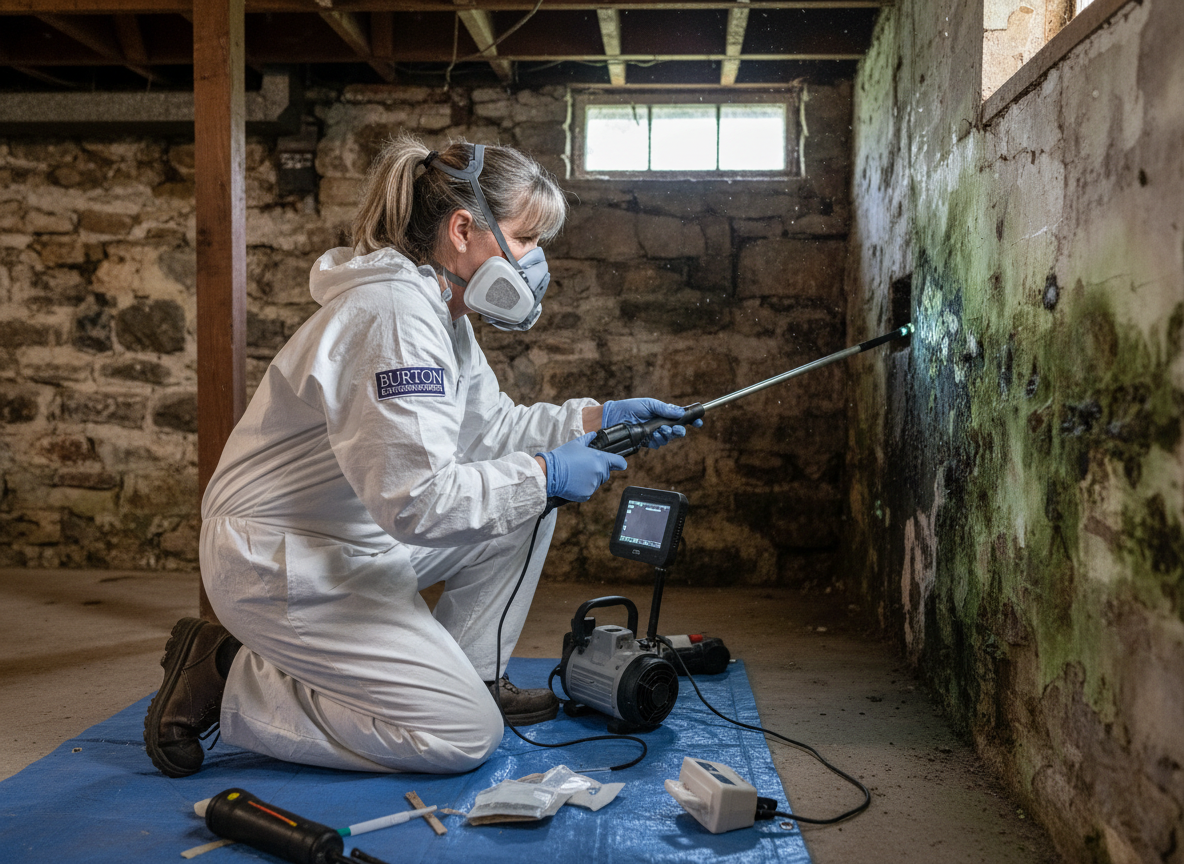
Mold inspection in Burton requires checking crawl spaces common in Vashon Island homes built before widespread slab foundations. Moisture from seasonal rains often collects under floor joists, leading to hidden colonies that surface only after occupants notice musty odors in living areas. Inspectors use moisture meters and borescopes to map affected zones without unnecessary demolition, then document findings with photos and moisture readings for the remediation crew.
Older Burton properties near the 97th Ave SW corridor frequently have attic insulation that traps condensation from roof leaks. During inspection we examine ventilation paths and insulation faces where black mold tends to form along roof sheathing. This step prevents misdiagnosis that could lead to incomplete remediation later.
King County building practices in the Burton area mean many homes have limited access points to wall cavities. We note these constraints in the report so the remediation team arrives with the right tools and containment plans rather than discovering surprises on site.
Final inspection reports include room-by-room moisture data and recommended next steps that align with actual conditions found in Vashon Island housing stock rather than generic checklists.
Technician insight
In Burton the thing that catches most people out with Mold Inspection is the way island rains pool against older foundation walls on the west side of Vashon, feeding hidden growth in crawl spaces that never dry out between storms.
Hidden Crawl Space Growth on 97th Ave
Homeowners noticed a persistent earthy smell in the living room after heavy winter rains. Inspection revealed elevated moisture along the north foundation wall and visible growth on joist bottoms in the crawl space. We documented the extent with photos and moisture logs, then handed the report to the remediation crew for targeted removal.
How it works
- 1
Initial Assessment
Review property history and visible signs of moisture while walking the home and surrounding grade.
- 2
Moisture Mapping
Use meters and thermal imaging to locate elevated moisture behind walls, under floors, and in attics.
- 3
Sampling
Collect air and surface samples where growth is suspected and send to an independent lab for analysis.
- 4
Report Delivery
Provide written findings with photos, lab results, and prioritized remediation recommendations within 48 hours.
Pricing
Pricing depends on square footage, number of stories, and whether crawl space or attic access is required.