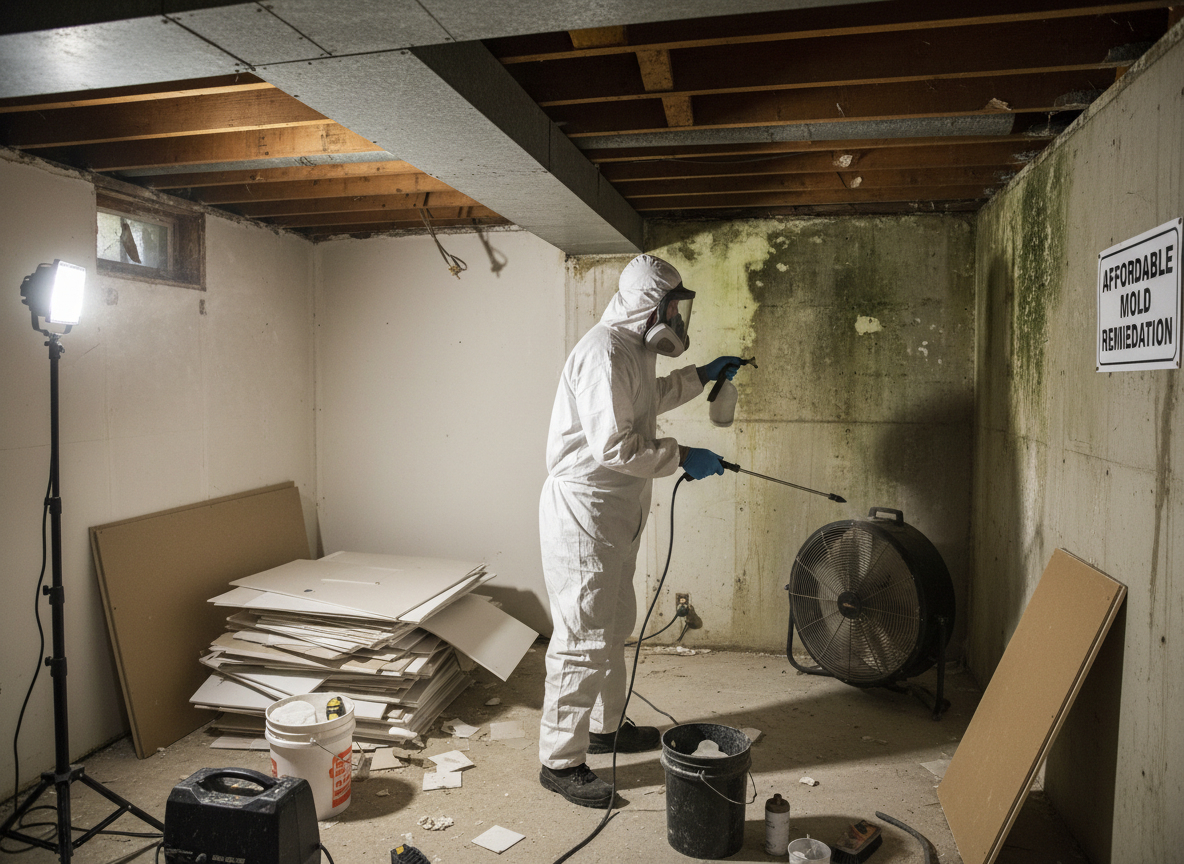
Burton sits on Vashon Island in King County where constant marine air and heavy winter rains drive moisture into crawlspaces and attics of mid-century homes. These structures often feature unsealed pier-and-beam foundations and single-pane windows that allow condensation to form on framing members. When homeowners attempt surface cleaning only, spores remain in the insulation and subfloor, leading to recurring growth once humidity climbs again in fall.
Affordable remediation here focuses on targeted containment rather than whole-house tenting. Technicians set up negative-air zones around affected joists, remove saturated insulation, and apply antimicrobial rinses that penetrate porous wood without requiring full demolition. Because many Burton properties lack easy equipment access due to narrow driveways and steep lots, crews stage HEPA scrubbers on the street and run flex ducting through basement windows to keep costs down while meeting King County ventilation codes.
Post-remediation verification uses moisture meters and air sampling at multiple interior points rather than relying on visual checks alone. This step catches hidden pockets behind cedar siding or under bathroom subfloors common in island homes built before 1970. Owners receive a written report noting any remaining elevated readings so they can address roof flashing or gutter extensions before the next storm cycle.
Seasonal Moisture Patterns
Winter storms push wind-driven rain under eaves on south-facing Burton slopes, while summer fog keeps relative humidity above 70 percent for weeks. Addressing both periods prevents repeat calls that erode any initial savings from low-cost remediation.
Technician insight
In Burton, the thing that catches most people out with affordable mold remediation is underestimating how far water travels along the gravelly glacial till under older crawlspaces; a small roof leak near the ridge can pool thirty feet downslope and rot rim joists you never see from the hatch.
Crawlspace Growth After Roof Leak
Heavy December rain entered through a lifted cedar shingle on a Burton home near 97th Ave SW. Water followed the slope of the floor joists and soaked insulation over the laundry area. We isolated the crawlspace, removed the wet batting, treated the framing, and added a vapor barrier section to stop future wicking from the soil. The homeowner avoided full floor replacement and the growth has not returned after the next wet season.
How it works
- 1
Initial Assessment
Technician arrives within hours, maps visible growth, and checks moisture levels in crawlspaces and attics typical of Burton homes.
- 2
Containment Setup
Plastic barriers and negative air machines isolate the work zone to prevent spore migration through older, unsealed floor plans.
- 3
Material Removal
Saturated insulation and affected wood sections are cut out and bagged for off-island disposal, focusing only on necessary areas to control expense.
- 4
Treatment And Drying
Antimicrobial solutions are applied and dehumidifiers run until readings drop below 12 percent on local lumber species.
- 5
Final Clearance
Independent air samples confirm levels match outdoor baselines before barriers come down.
Pricing
Upfront quotes after inspection reflect actual square footage and access constraints on Vashon lots rather than flat rates.