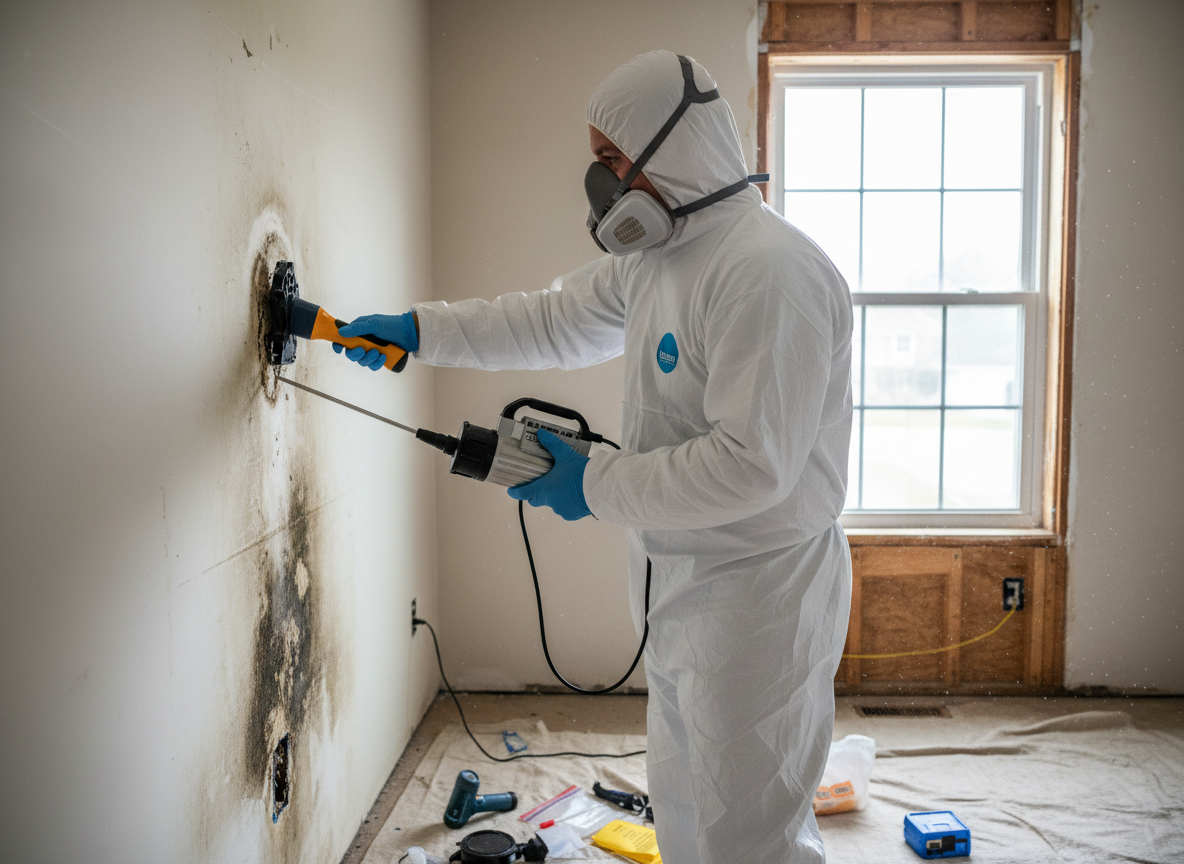
Air quality and mold testing in Burton homes often centers on crawl spaces and attics where Pacific Northwest moisture lingers. Many properties here sit on sloped lots with limited ventilation, allowing hidden growth behind insulation or under subfloors after roof leaks or plumbing issues. Testing includes spore trap samples and moisture mapping to identify active colonies without unnecessary demolition.
Edge cases appear when older single-wall construction meets modern additions, creating cold joints that trap condensation. We run indoor-outdoor comparisons and check HVAC systems for distribution, since Burton properties frequently use heat pumps that can spread spores if filters are neglected. Results guide whether containment or further remediation is required under local building practices.
Homeowners sometimes overlook soil contact along foundation walls on Vashon’s clay-heavy terrain, which holds water longer after heavy rain. Testing protocols account for seasonal shifts, with winter samples often showing higher readings than summer ones due to reduced airflow. Reports include chain-of-custody documentation suitable for real estate transactions or insurance claims.
We avoid over-testing by focusing on complaint areas first, then expanding only when readings exceed typical baselines for the Burton microclimate. This approach prevents unnecessary costs while catching issues common in 1970s-1990s builds prevalent on the island.
Technician insight
In Burton, the thing that catches most people out with Air quality and mold testing is how the island’s clay soils and frequent fog keep crawl spaces damp year-round, even in homes that look dry upstairs. Homeowners often seal vents thinking it helps, but that traps the moisture we find on every other job.
Hidden Growth After Roof Leak
A Burton homeowner noticed musty smells in the hallway after winter storms. We found elevated spores near a bathroom ceiling tied to an older roof repair that had failed at the flashing. Samples confirmed Penicillium growth in the attic insulation. Containment and targeted removal cleared the issue without whole-house disruption.
How it works
- 1
Initial Consultation
Discuss symptoms and property history over the phone or on site at the Burton address.
- 2
Visual Inspection
Walk-through of affected rooms, crawl space, and attic to note water stains, odors, and ventilation gaps.
- 3
Sampling
Collect air and surface samples plus moisture readings using calibrated meters.
- 4
Lab Analysis
Send samples for independent lab identification of mold types and spore counts.
- 5
Report Delivery
Provide written findings with photos and recommendations for next steps.
Pricing
Pricing based on property size and number of samples required; upfront quote provided after initial walkthrough.