Burton sits on Vashon Island in King County where frequent winter rains and marine air keep relative humidity high year-round. Many homes here date to the 1920s through 1960s with cedar shake or composition roofs and minimal ridge venting. Warm attic air meets cold roof decks and condensation forms on rafters and sheathing, feeding mold colonies that often stay hidden until homeowners notice musty odors or staining on ceiling drywall. Testing begins with moisture meters and thermal imaging to locate active leaks before any samples are pulled, because disturbing dry mold can send spores into living spaces below.
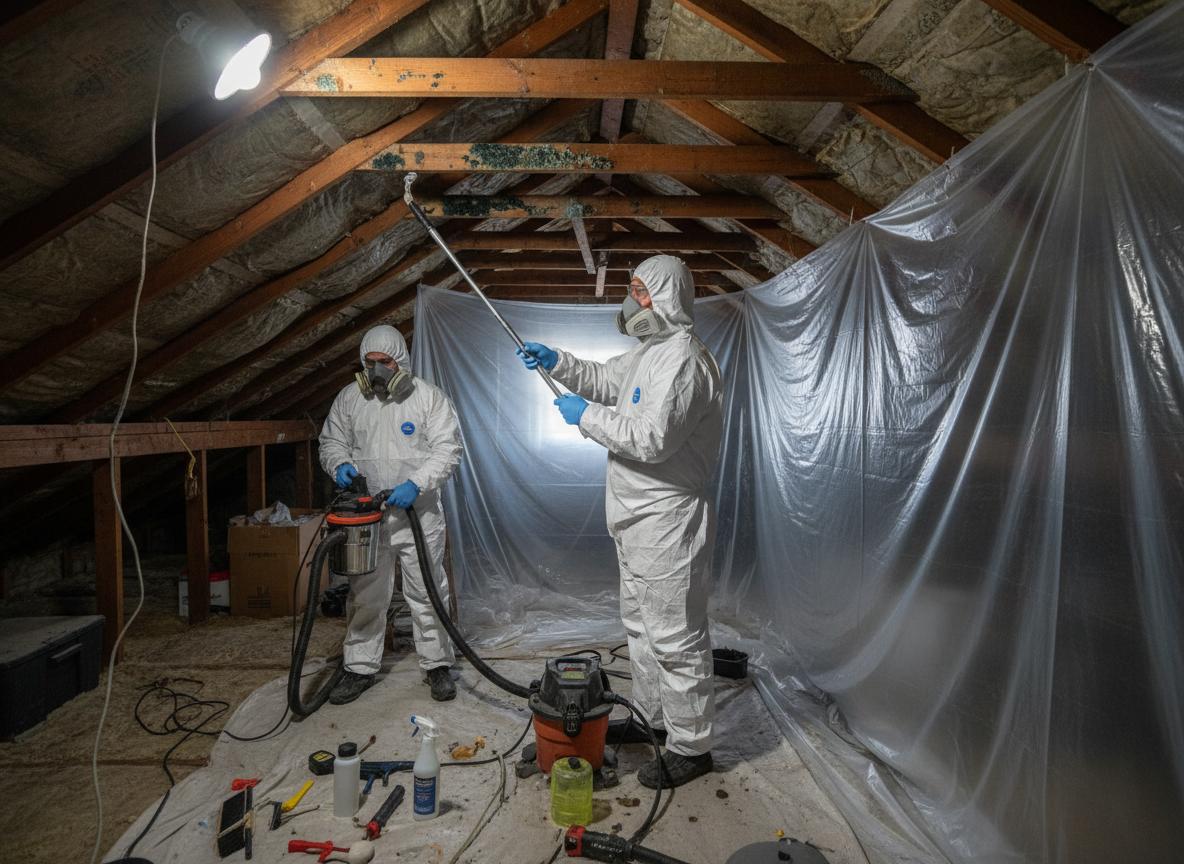
Removal work on Vashon requires full containment with plastic sheeting and negative air machines exhausting through a window or roof vent. Insulation is removed in sealed bags, affected wood is HEPA-vacuumed and treated with antimicrobial solutions, then dried with dehumidifiers sized for the island's cool temperatures. Crews check for hidden rot in collar ties and ridge boards, common failure points in older Burton homes after decades of roof leaks. Final clearance testing confirms spore counts match outdoor baselines before the attic is returned to service.
Homeowners often overlook the role of bathroom and dryer vents that terminate in the attic instead of through the roof, a detail found in many island properties built before current code requirements. These continuous moisture sources keep mold returning even after surface cleaning. Proper remediation includes rerouting those vents and adding insulation baffles to maintain airflow, steps that address the root cause rather than just the visible growth.
Technician insight
In Burton, the thing that catches most people out with Attic mold testing and removal is how cedar shake roofs on 1950s island homes trap moisture under layers of moss, letting water reach the attic sheathing long before any ceiling stain appears.
Recurring Odor After Winter Rains
A Burton homeowner reported a persistent musty smell following heavy January rains. Inspection revealed condensation and mold on north-side rafters where bathroom vents terminated inside the attic. Containment was established, wet insulation removed, and vents rerouted through the roof. Clearance testing passed and the odor did not return.
How it works
- 1
Initial Inspection
Technicians examine the attic from inside and roof exterior, checking for leaks, ventilation gaps, and moisture readings around Burton's older rooflines.
- 2
Air and Surface Sampling
Samples are collected and sent for lab analysis to identify mold types common in King County's damp climate before any disturbance begins.
- 3
Containment and Removal
Plastic barriers and negative air are set up; affected materials are bagged and removed while surfaces are cleaned and treated.
- 4
Drying and Clearance
Dehumidifiers and fans dry the space, followed by post-remediation testing to confirm safe spore levels before re-entry.
Pricing
Pricing varies by attic size, extent of hidden growth, and whether insulation replacement or vent rerouting is required.