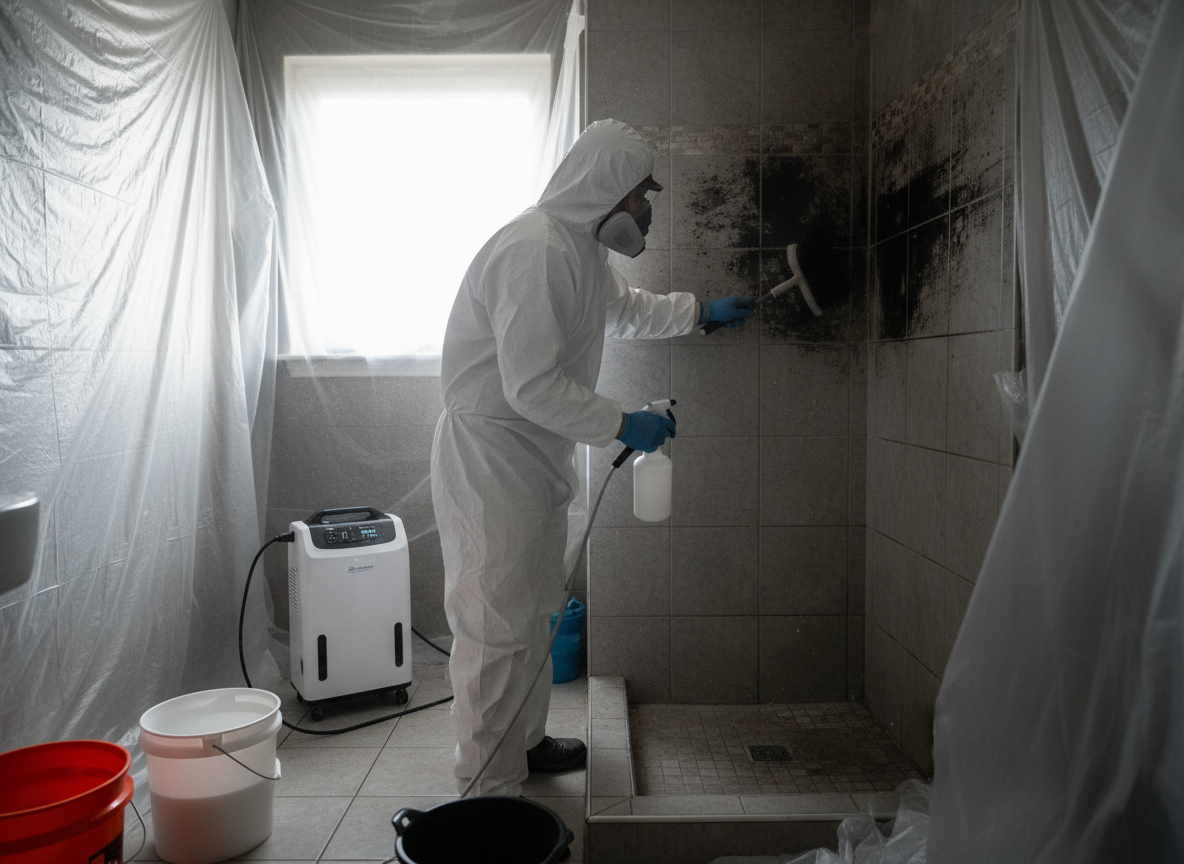
Bathroom mold removal in Burton homes often starts with moisture trapped behind tile and in the subfloor due to the island's older plumbing runs and limited crawlspace ventilation. We cut back affected drywall and base plates only after negative air containment is set, then treat framing with EPA-registered antimicrobials before replacing with moisture-resistant materials. Edge cases include mold that has traveled along the shower pan into the joists, requiring partial floor removal that most homeowners do not expect until inspection.
King County code requires proper disposal of contaminated porous materials and documentation of moisture readings before any rebuild. In Burton bathrooms we commonly find growth under vinyl flooring laid over particleboard, which must be fully removed rather than sealed. Homeowners sometimes attempt bleach cleaning on grout lines only to see recurrence within weeks because the source behind the wall was never addressed.
We always test for hidden moisture with infrared and pin meters before declaring an area clear, especially around tub surrounds in single-story ranch homes common on Vashon. This prevents callbacks when seasonal humidity spikes push residual spores back to the surface.
Technician insight
In Burton, the thing that catches most people out with bathroom mold removal service is how the island's frequent fog and older plumbing in 1960s-era homes allow moisture to migrate into subfloors undetected until it reaches the joists.
Shower Leak Behind Tile in Burton
A Burton homeowner saw black spots along the tub base. We opened the wall and found mold tracking down the subfloor from a hairline leak in the original cast-iron drain. Removed the affected sections, treated the joists, and restored with cement board and new tile. The bathroom passed clearance testing and showed no recurrence after the next wet season.
How it works
- 1
Inspection and Containment
We map moisture with meters and set up negative air to protect the rest of the home.
- 2
Removal of Affected Materials
Cut out moldy drywall, base plates, and any compromised subfloor sections for proper disposal.
- 3
Antimicrobial Treatment
Apply EPA-registered products to framing and allow full dwell time before drying.
- 4
Drying and Clearance Testing
Use dehumidifiers and air movers, then verify with moisture readings and air sampling.
- 5
Restoration
Install new moisture-resistant drywall and flooring once clearance is confirmed.
Pricing
Upfront quotes after inspection; price moves with square footage affected, depth of hidden growth, and whether subfloor work is required.