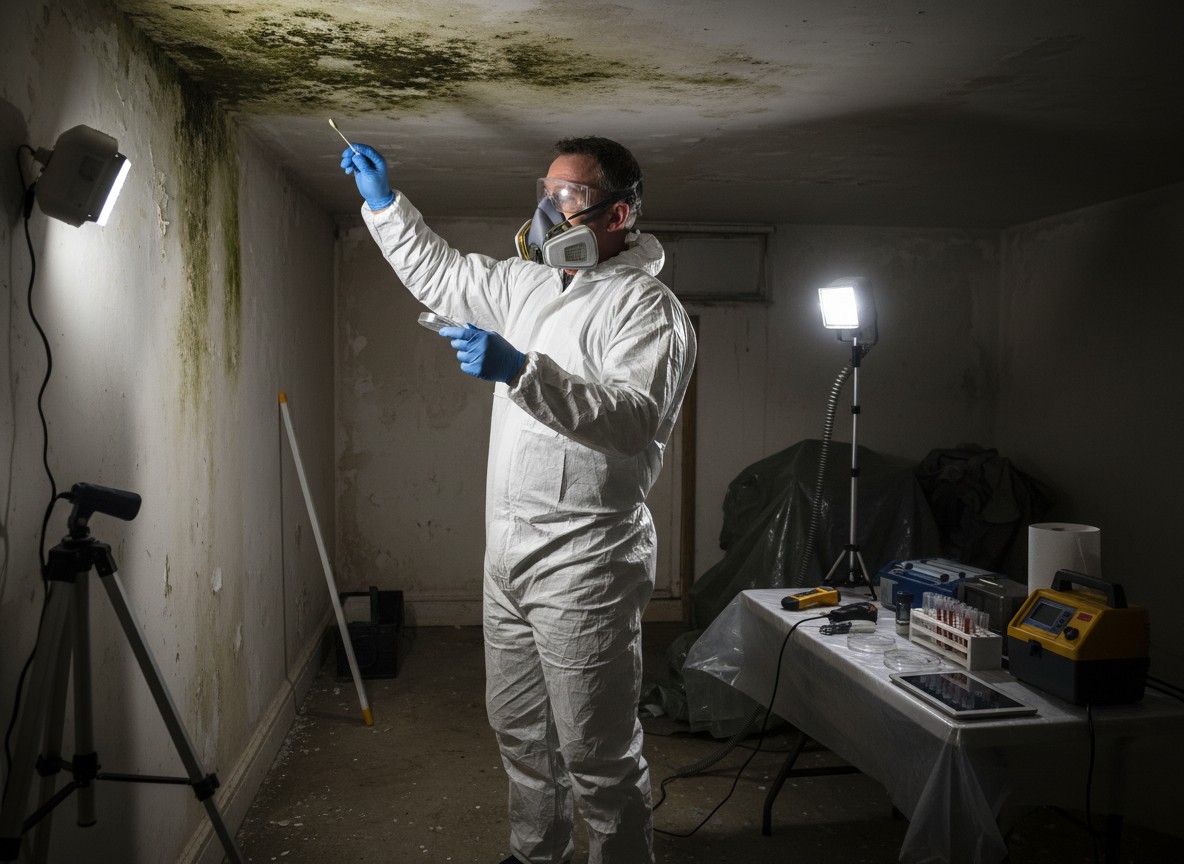
Burton sits on Vashon Island where winter rains and high humidity drive moisture into crawlspaces and attics of homes built before the 1960s. These older balloon-framed houses often lack modern vapor barriers, so water from roof leaks or poor drainage travels along joists and collects behind plaster walls. Emergency testing starts with moisture meters and air sampling to locate active growth before it spreads through shared wall cavities to neighboring rooms.
King County building practices from the mid-century era left many Burton properties with single-pane windows and unsealed foundations that wick groundwater during prolonged wet periods. When a sudden leak occurs from a failing pipe or storm-driven roof failure, visible stains can appear within days while hidden colonies form inside insulation. Testing crews use borescopes through small access points to avoid unnecessary demolition and confirm whether remediation must extend into adjacent closets or underfloor areas.
Vashon terrain slopes toward the Sound in many Burton neighborhoods, creating drainage paths that funnel rainwater against foundation walls during heavy November and December storms. This seasonal pattern means emergency calls spike when interior humidity climbs above 60 percent and musty smells reach living spaces. Proper sampling distinguishes between surface condensation and structural mold so homeowners know whether the issue is isolated to one wall or requires broader containment.
Technician insight
In Burton, the thing that catches most people out with emergency mold testing services is the way older Vashon Island homes with dirt crawlspaces trap winter rain against untreated floor joists, letting colonies grow for months before any musty smell reaches the kitchen.
Storm Leak in Burton Crawlspace
Heavy December rain entered through a roof valley on a pre-1950 Burton home and soaked insulation above the living room. Testing revealed elevated moisture in the crawlspace joists and active growth on the subfloor that had not yet reached the upstairs drywall. Containment was set and samples confirmed the extent so targeted drying could begin without opening the entire ceiling.
How it works
- 1
Initial Intake
Answer the 24/7 call, record symptoms and property details, then dispatch a technician from the Vashon base within hours.
- 2
On-Site Assessment
Walk the Burton home with moisture meters, thermal imaging, and air sampling equipment to map wet zones and visible growth.
- 3
Sample Collection
Take surface swabs, air cassettes, and wall cavity samples for lab analysis while documenting conditions with photos.
- 4
Report Delivery
Provide written findings with moisture readings, lab results, and recommended next steps within 24 to 48 hours.
Pricing
Pricing varies by home size, number of samples, and access difficulty; quotes provided after initial assessment.