Burton sits on Vashon Island in King County where heavy winter rains and mild temperatures keep soil and crawl spaces damp for months. Older single-story homes with pier-and-beam foundations often develop mold along rim joists and subflooring when roof leaks or poor grading allow water to pool. Abatement here starts with locating every moisture source rather than simply spraying visible growth because untreated damp wood will regrow colonies within weeks.
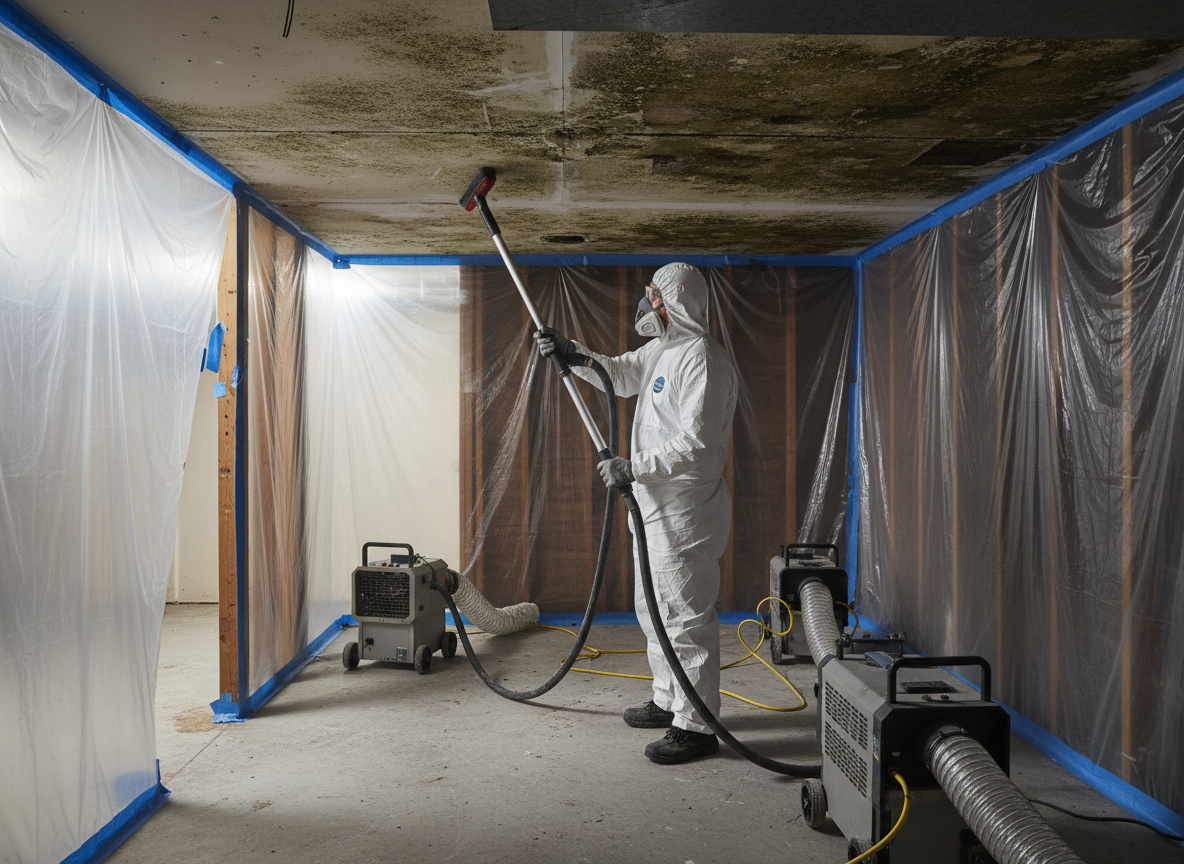
We use negative-air machines with HEPA filtration and physical barriers to keep spores from drifting into living areas during removal. Affected drywall, insulation, and trim are cut out at least eighteen inches beyond visible mold, then the remaining framing receives an antimicrobial wash followed by drying to under fifteen percent moisture content. In Burton homes with finished basements we often find mold behind paneling where condensation from uninsulated concrete meets interior humidity, requiring removal of finishes before treatment can reach the block.
King County code requires proper disposal of contaminated materials and documentation of moisture correction before any new finishes are installed. Homeowners sometimes attempt to paint over stains, but that traps moisture and creates larger hidden colonies. We always verify the fix with post-remediation moisture readings and a visual inspection before closing the containment.
Technician insight
In Burton the thing that catches most people out with mold abatement is the combination of frequent rain and older homes built close to grade so that even small roof leaks send water straight into the crawl space where it sits against the rim joists for months.
Hidden Crawl Space Growth
A Burton homeowner noticed a musty smell after heavy rains. Inspection showed mold along the rim joists under the kitchen where a small roof leak had soaked the insulation. We contained the crawl space, removed wet insulation and affected subfloor edges, treated the joists, and added ventilation. Follow-up readings stayed dry through the next winter.
How it works
- 1
Initial Assessment
Inspect all accessible areas including crawl spaces and attics for visible growth and moisture readings.
- 2
Containment Setup
Install plastic barriers and negative air machines to isolate the work zone from the rest of the home.
- 3
Removal and Cleaning
Cut out and bag affected materials then treat remaining surfaces with EPA-registered antimicrobials.
- 4
Drying and Verification
Run dehumidifiers until moisture levels drop then confirm with meters and a final walkthrough.
Pricing
Pricing depends on square footage affected, access to crawl spaces, and whether hidden growth requires opening finished walls; we provide a written scope after the initial inspection.