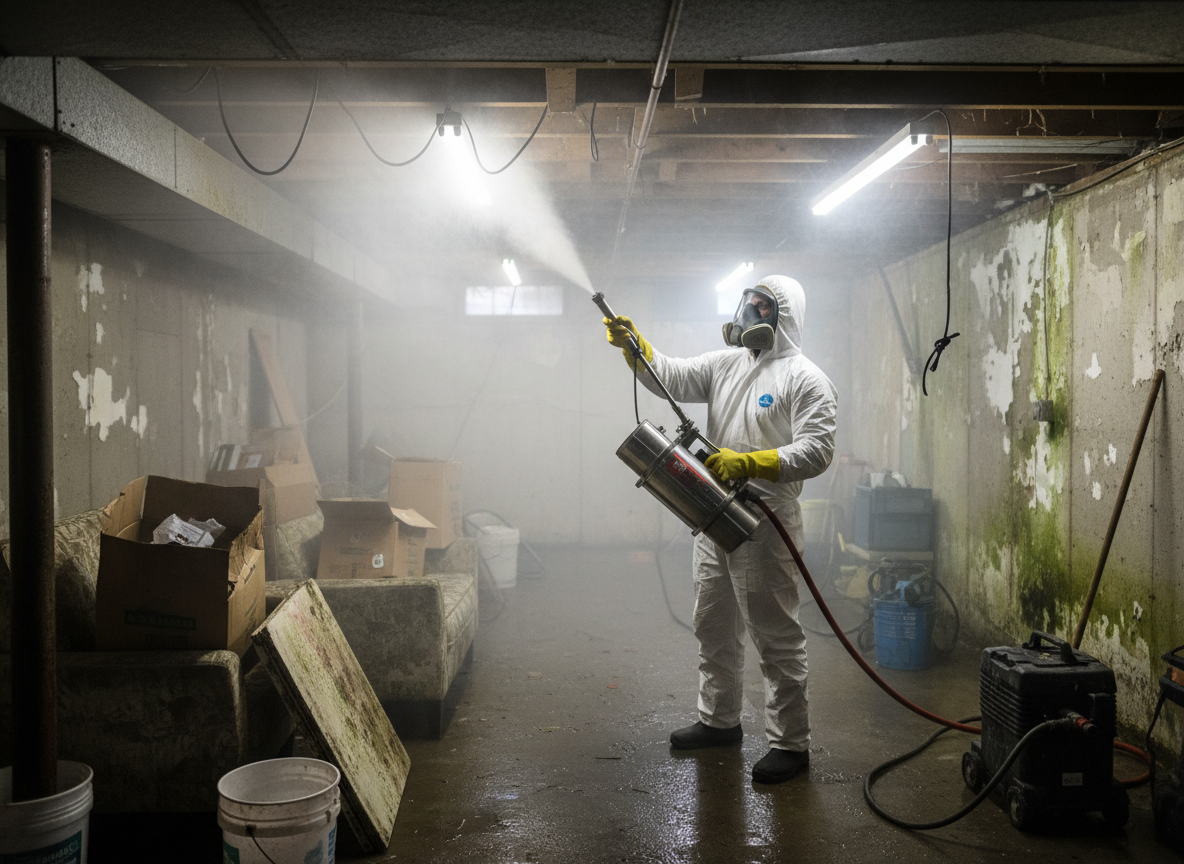
Mold fogging treatment disperses a fine mist of antimicrobial agents through HVAC systems, attics, and wall cavities common in Burton's older waterfront homes. These structures often feature tight crawl spaces and single-pane windows that trap moisture from Puget Sound fog and winter rains, allowing spores to circulate long after visible growth is removed. The process requires sealing off living areas first to keep the fog contained and directing it into ducts and underfloor voids where brushes cannot reach.
Homeowners in Burton frequently call after noticing musty odors following heavy rainfall because the island's clay-heavy soils hold water against foundations. Fogging addresses the airborne portion but must follow source removal; skipping that step lets colonies return within weeks. We use low-residue formulas suited to the area's mild temperatures so treated spaces can be reoccupied the same day without lingering chemical smells.
Edge cases include multi-story homes on steep Vashon slopes where gravity pulls moisture into lower levels. Fogging here demands extra containment barriers around stairwells and careful monitoring of airflow to avoid pushing spores into unaffected rooms. Always test surfaces after treatment because fog alone does not penetrate thick drywall or insulation saturated by repeated leaks.
Technician insight
In Burton, the thing that catches most people out with mold fogging treatment is how quickly spores re-enter through unsealed crawl spaces under older island homes when winter rains raise groundwater levels along the shoreline.
Crawl Space Odor After Storm
A Burton homeowner noticed persistent musty smells after heavy November rain. We found moisture wicking into floor joists from saturated soil against the foundation. Fogging reached the underfloor voids after source drying, clearing the odor without opening finished floors.
How it works
- 1
Initial Assessment
Walk through the property to locate moisture sources and map airflow paths in Burton homes.
- 2
Containment Setup
Seal rooms and HVAC intakes to keep fog from migrating into clean areas.
- 3
Fog Application
Introduce the treatment mist through ducts, attics, and crawl spaces for full coverage.
- 4
Ventilation and Clearance
Air out treated spaces and check surfaces before reopening to occupants.
Pricing
Pricing varies by property size and extent of hidden growth; we provide upfront quotes after inspection.