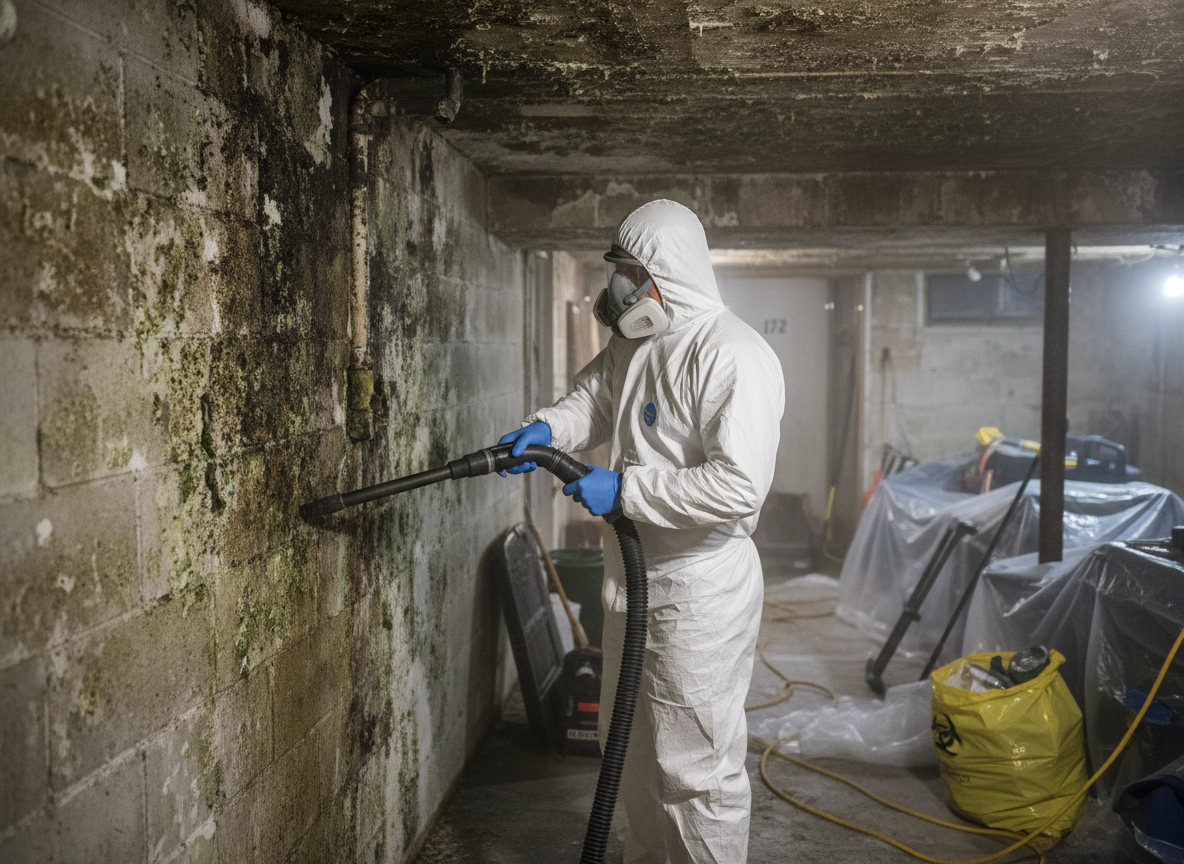
Burton sits on Vashon Island where steady rain and marine air keep crawl spaces and attics damp much of the year. Older single-story homes with pier-and-beam foundations trap moisture against untreated joists and subfloors, allowing hidden growth that only shows up once drywall is opened. Crews from 23807 97th Ave SW start every job by mapping moisture with meters rather than guessing, then isolate the affected rooms with plastic sheeting before any removal begins.
Island properties often lack easy access for equipment, so teams bring smaller HEPA air scrubbers and negative-air machines that fit through standard doors and ferry ramps. Removing moldy insulation or drywall requires bagging material on site to prevent spores from spreading during the short drive back to the mainland. Homeowners notice that once the source is corrected, the same rooms rarely need repeat work if gutters and downspouts are kept clear of maple leaves that collect every fall.
Edge cases appear when mold reaches shared walls between a main house and an older detached garage or studio. These walls are frequently balloon-framed, allowing spores to travel vertically inside the stud bays. Remediation then includes cutting inspection ports at multiple heights and treating both sides before insulation is replaced. The work stays contained until clearance samples meet the same standards used on the mainland side of Puget Sound.
Technician insight
In Burton the thing that catches most people out with mold remediation near me is how quickly water from the island's frequent rain travels under older pier-and-beam homes and soaks the underside of subfloors before anyone sees a ceiling stain. Homeowners often open a wall only to find the real problem started two joist bays away where a downspout dumps against the foundation.
Hidden Growth in a Burton Crawl Space
A Burton homeowner noticed a musty smell after weeks of rain but no visible spots on interior walls. Inspection found standing water under the laundry room where the downspout had clogged. Crews removed saturated insulation, dried the joists, and treated the area; clearance samples passed and the odor did not return.
How it works
- 1
Site Assessment
Technicians arrive from the Vashon address, document visible growth, and use moisture meters on floors, walls, and ceilings in Burton homes.
- 2
Containment Setup
Plastic barriers and negative air are installed to keep spores from moving into clean living spaces during removal.
- 3
Material Removal
Affected drywall, insulation, and trim are cut out, bagged, and removed while HEPA filtration runs continuously.
- 4
Drying and Treatment
Remaining surfaces are dried with air movers and treated with EPA-registered antimicrobials before reconstruction begins.
- 5
Clearance Testing
Air and surface samples are collected and sent to an independent lab to confirm the space meets post-remediation criteria.
Pricing
Upfront quotes after inspection, billed by affected square footage and access difficulty.