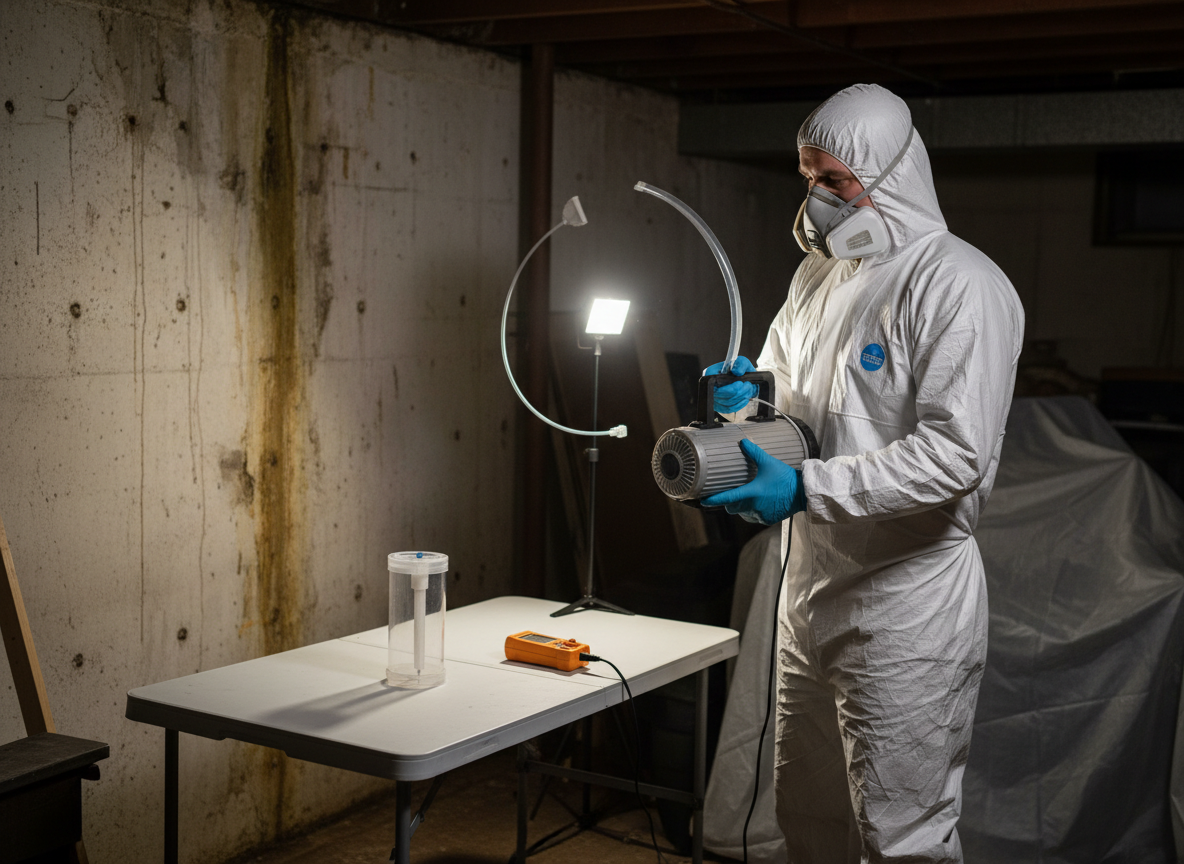
Mold spore testing in Burton homes begins with understanding how Vashon Island's frequent rain and marine air keep indoor humidity elevated year-round. Older wooden houses common throughout Burton and nearby neighborhoods often have crawl spaces and attics that trap moisture against the foundation, allowing spores to settle in insulation and framing. Technicians collect air samples from multiple rooms plus outdoor controls, then take surface swabs from suspect materials such as drywall or subflooring. Samples go to an accredited lab for genus-level identification so homeowners know whether the issue is common cladosporium or more aggressive species that require different containment.
Testing must account for the island's microclimates. Properties closer to the shoreline experience higher salt-laden air that can mask musty odors, while inland homes near the ridge may have poorer ventilation in winter. A single test session includes at least three indoor locations plus an outdoor baseline to distinguish normal background levels from amplification inside the structure. Results typically return within 48 hours and include spore counts per cubic meter, allowing clear comparison against outdoor readings before any remediation plan is discussed.
Homeowners sometimes request testing after noticing recurring condensation on windows or musty smells in closets. In these cases the protocol expands to include wall cavity checks using borescopes and moisture meters to locate hidden growth behind paneling or in HVAC returns. Burton's older stock often lacks modern vapor barriers, so spore counts can spike after heavy storms when groundwater rises against slab foundations. Clear documentation of each sample location and lab report helps residents decide whether to pursue full remediation or simply improve ventilation first.
Technician insight
In Burton the thing that catches most people out with mold spore testing is how the island's constant marine humidity keeps crawl spaces damp even in summer, so a single dry-weather sample can miss colonies that activate after the next rain event.
Elevated Spores After Winter Storms
A Burton homeowner noticed a persistent earthy smell in the basement following several weeks of heavy rain. Testing revealed elevated aspergillus and penicillium counts in the crawl space air while outdoor levels remained low. Samples confirmed growth on older insulation against the foundation wall. The report guided targeted removal of affected material and improved ventilation without requiring whole-house remediation.
How it works
- 1
Initial Assessment
Technician reviews the property layout and any reported moisture issues while walking through Burton homes to identify likely sampling zones.
- 2
Sample Collection
Air cassettes and surface swabs are taken from multiple interior rooms plus an outdoor control, with locations logged for the lab report.
- 3
Laboratory Analysis
Samples are sent for spore identification and quantification, returning genus-level results within two business days.
- 4
Results Review
Findings are explained on site with recommendations for next steps if elevated counts indicate active growth.
Pricing
Cost depends on number of samples required and property size; quotes provided after initial walkthrough.