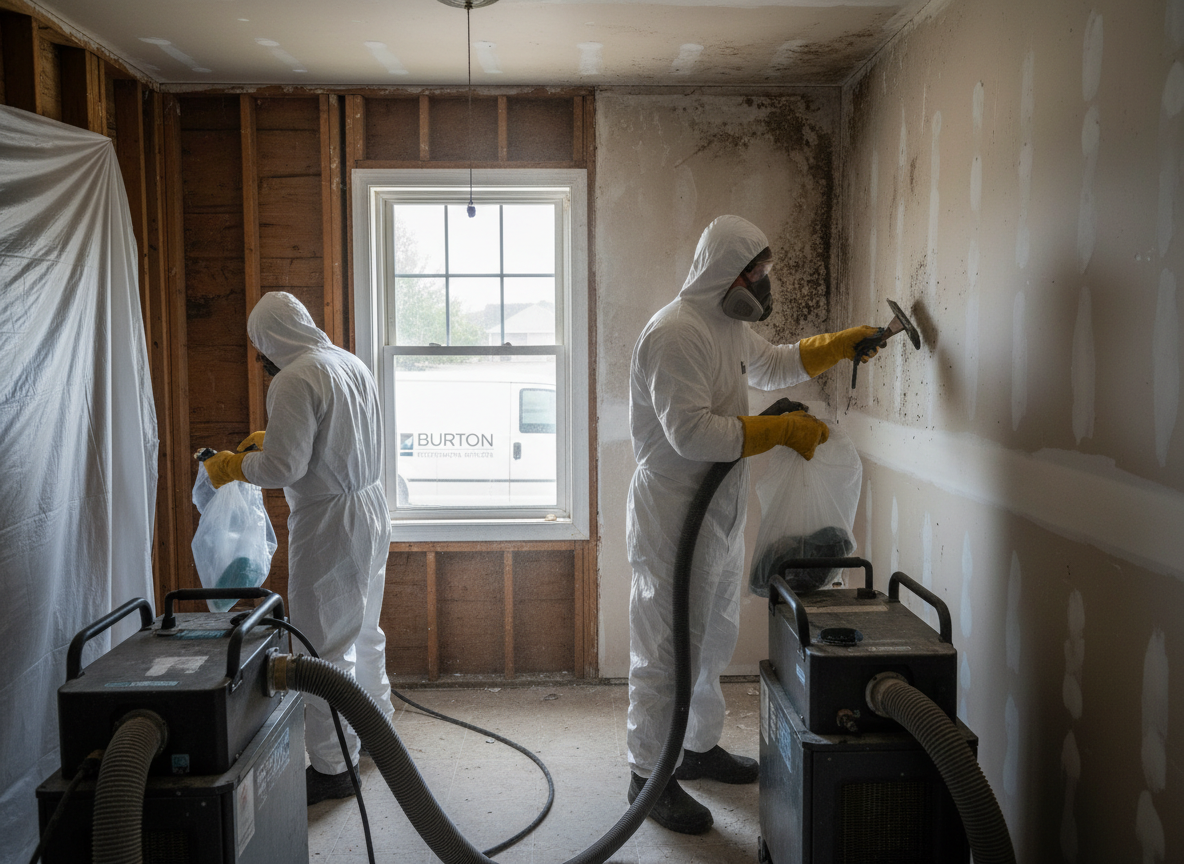
Burton homes often sit on Vashon Island's glacial till soils where poor drainage combines with frequent Puget Sound rain to push moisture into crawl spaces and basements. Older single-story houses from the mid-century era commonly have uninsulated or poorly vented underfloor areas that trap humidity, allowing mold to colonize behind baseboards and on joists before any visible signs appear inside living spaces.
Professional mold removal here requires negative-air containment and HEPA filtration to keep spores from migrating through the small, tightly connected rooms typical of island cottages. Technicians must also account for ferry schedules when staging equipment, since heavy rains can saturate exterior siding and force additional drying time in wall cavities that standard mainland jobs rarely encounter.
King County building practices in these neighborhoods frequently left minimal vapor barriers during original construction, so removal work often reveals hidden growth along sill plates where groundwater wicks upward. Ignoring this leads to rapid regrowth once humidity returns in fall.
Hidden Moisture Pathways
Constant fog and wind-driven rain on Vashon create condensation on cold pipes in unheated crawl spaces, a detail missed by basic visual checks.
Post-Storm Timing
Jobs spike after prolonged wet periods when standing water in yards pushes mold higher into finished walls than in drier inland counties.
Technician insight
In Burton, the thing that catches most people out with professional mold removal is how the island's constant drizzle and shallow water table let moisture travel under slab foundations of 1960s homes, so what looks like a small bathroom stain often traces back to saturated subflooring that needs full perimeter drying before any finish work.
Crawl Space Mold After Heavy Rains
A Burton homeowner noticed a musty odor in the kitchen after several days of rain. Inspection revealed black mold on joists where roof runoff had pooled against the foundation. Containment was erected, wet insulation removed, and the space dried with targeted airflow. Follow-up testing confirmed clearance and the owner added a vapor barrier to reduce future humidity.
How it works
- 1
Site Assessment
Walk-through with moisture meters and thermal imaging to map affected zones in Burton crawl spaces and attics.
- 2
Containment Setup
Install plastic barriers and negative air machines to isolate work areas from the rest of the home.
- 3
Removal and Disposal
Cut out saturated materials, bag debris, and transport off-island for proper disposal.
- 4
Drying and Verification
Run commercial dehumidifiers, then test surfaces to confirm moisture and spore levels meet clearance criteria.
Pricing
Cost depends on square footage affected and access difficulty; upfront quotes provided after inspection.