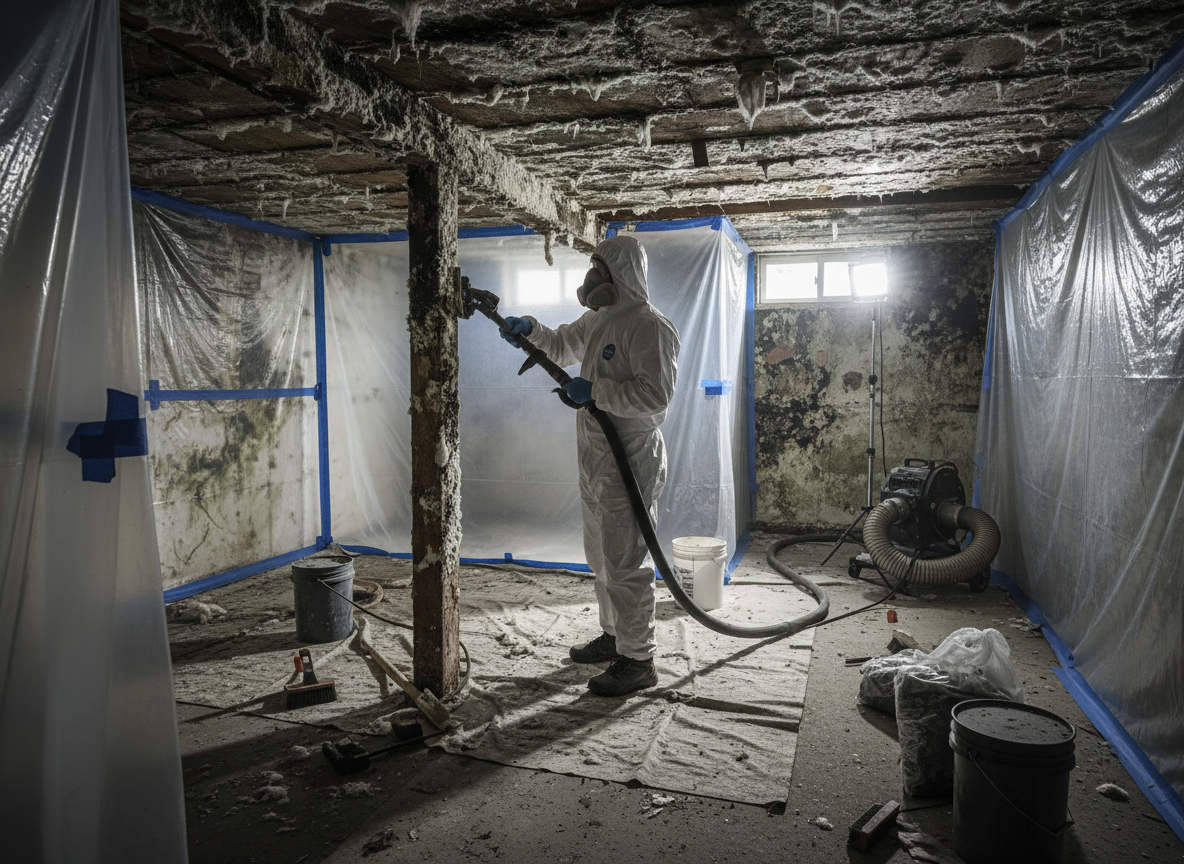
Toxic mold removal in Burton requires careful attention to the older housing stock common on Vashon Island, where many homes built before the 1990s have limited ventilation and original plaster or drywall that readily absorbs moisture from King County's frequent rain. Technicians begin by establishing negative air pressure and physical containment to prevent spores from migrating into unaffected rooms during demolition of affected materials. Hidden growth often appears behind baseboards or in wall cavities near plumbing penetrations, especially in single-story homes with crawlspaces that stay damp year-round.
Removal work focuses on cutting out saturated drywall, insulation, and trim while HEPA vacuuming and damp wiping all exposed surfaces. On Vashon, the island's clay-heavy soils and limited drainage around many Burton properties mean exterior grading checks are essential to stop recurrence after the interior work finishes. Air scrubbers run continuously during the project, and post-remediation clearance sampling confirms spore levels have returned to normal background counts before any rebuilding begins.
Homeowners in Burton often discover issues after noticing musty odors near bathrooms or laundry areas, where older vent fans fail to exhaust properly. The 24/7 availability from the Vashon base at 23807 97th Ave SW allows same-day response when water intrusion from roof leaks or appliance failures creates urgent conditions. Every job includes detailed photo documentation of affected areas and a written scope that lists exactly which materials will be removed.
Technician insight
In Burton, the thing that catches most people out with toxic mold removal is how water sits against foundation walls in pre-1980 homes because of Vashon's heavy winter rains and the way many properties slope back toward the house instead of away from it.
How it works
- 1
Initial Assessment
Technicians inspect Burton properties for visible growth, moisture readings, and hidden cavities using infrared cameras and moisture meters.
- 2
Containment Setup
Plastic barriers and negative air machines isolate the work zone to keep spores from spreading through the rest of the home.
- 3
Material Removal
Affected drywall, insulation, and trim are cut out and bagged for disposal while HEPA filtration runs throughout.
- 4
Cleaning and Drying
All remaining surfaces receive HEPA vacuuming and antimicrobial treatment, followed by drying equipment where needed.
- 5
Clearance Testing
Air and surface samples are collected and analyzed to verify the space meets post-remediation standards before barriers come down.
Pricing
Upfront quotes provided after on-site inspection; final cost depends on extent of hidden growth and materials affected.