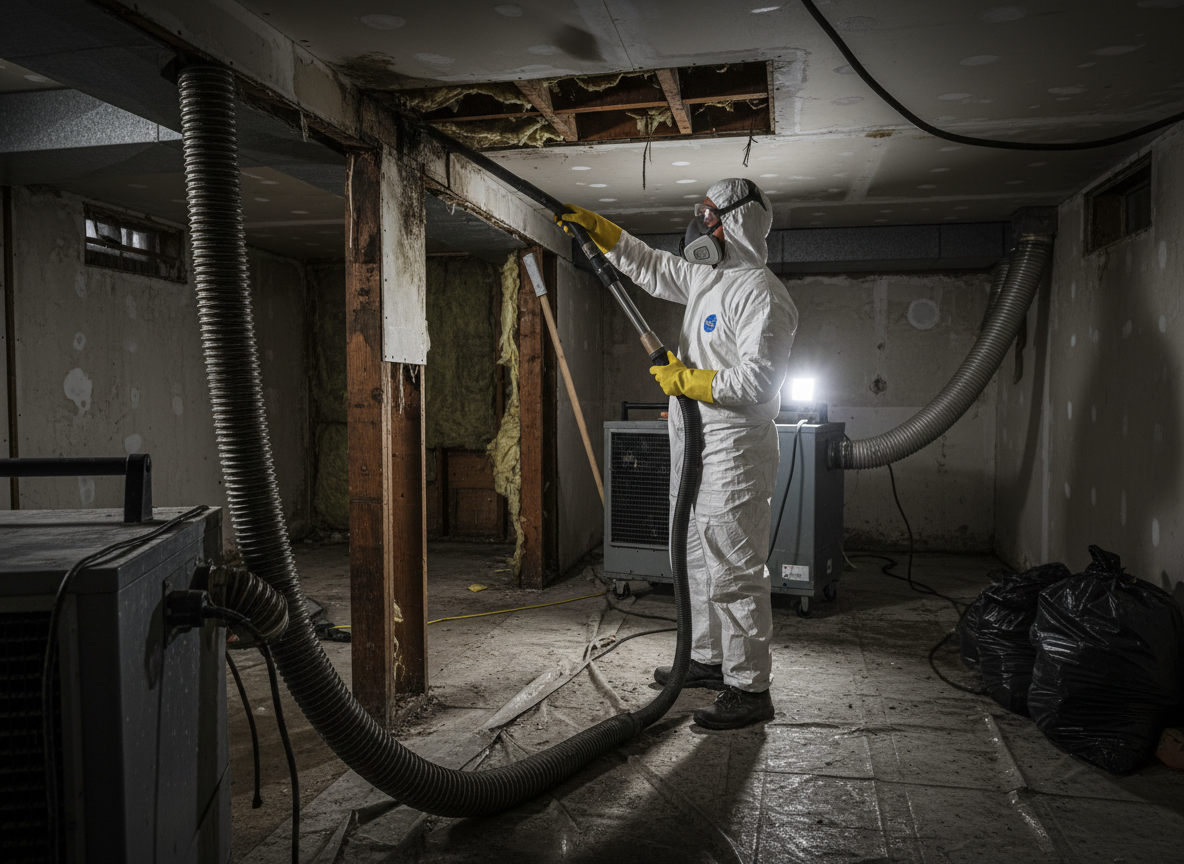
Vashon Island homes in Burton often sit on crawlspaces or partial basements built before modern vapor barriers became standard. When heavy winter rains saturate the clay-heavy soils, water migrates under sill plates and into rim joists. Once relative humidity stays above 60 percent for more than a few days, mold colonies establish on subfloor plywood and insulation. Remediation requires removing affected materials, drying the cavity to below 12 percent moisture content, and treating remaining framing with EPA-registered antimicrobials before new insulation is installed.
Edge cases appear after roof leaks around brick chimneys or failed flashing on 1970s additions common in Burton. These leaks frequently travel along ceiling joists and show up as dark staining on interior drywall weeks later. Containment must extend into adjacent rooms because spores travel through open floor plans typical of island cottages. Air scrubbing with HEPA filtration runs continuously during removal to keep airborne counts low enough for safe re-entry.
King County code requires proper disposal of mold-contaminated drywall and insulation; simply bagging and taking it to the Vashon transfer station is not enough. We separate Category 3 water-damaged materials from Category 1 and document chain of custody. Homeowners receive a written moisture map and post-remediation verification report that can be shared with insurers or future buyers.
Seasonal timing matters. Spring melt combined with April showers often re-wets previously dried cavities if French drains or exterior grading were never corrected. We always inspect perimeter drainage and downspout extensions before signing off on a project.
Technician insight
In Burton the thing that catches most people out with water damage mold remediation is how quickly rain on Vashon’s south-facing slopes re-soaks crawlspaces if the exterior grade still slopes toward the foundation. We see it every spring in homes built before 1980.
Crawlspace growth after winter rains
A Burton homeowner noticed musty odor in the living room after three weeks of steady rain. Inspection found standing water under the 1968 house and black growth on joists. We removed wet insulation, dried the cavity, treated the wood, and installed a vapor barrier tied to the foundation. Odor disappeared and moisture readings stayed below 10 percent.
How it works
- 1
Initial Moisture Mapping
Technicians arrive with moisture meters and thermal cameras to locate every wet cavity in Burton homes without tearing unnecessary drywall.
- 2
Containment Setup
Negative-air machines and plastic barriers isolate the work zone so spores do not migrate into living areas during removal.
- 3
Material Removal and Cleaning
Affected drywall, insulation, and baseboards are removed; remaining wood is sanded or treated and dried to documented dry standards.
- 4
Verification and Clearance
Post-remediation moisture readings and air samples confirm the space meets industry dry standards before reconstruction begins.
Pricing
Upfront quotes provided after inspection; cost driven by square footage affected and whether structural wood requires sanding or replacement.